
Former Texas Tech Professor Pleads Guilty to Leading Fentanyl Distribution Ring in Lubbock
LUBBOCK, Texas – A former Texas Tech University assistant professor has pleaded guilty in federal court to leading a fentanyl distribution conspiracy that authorities say used his expertise in supply chain management to operate a sophisticated drug trafficking network responsible for multiple overdoses.
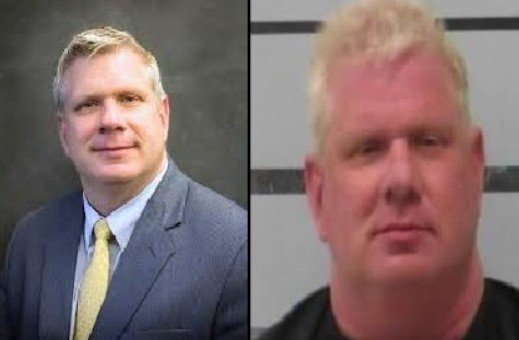
The U.S. Attorney’s Office for the Northern District of Texas announced that 51-year-old Daniel Taylor of Lubbock pleaded guilty on July 1 to conspiracy to distribute more than 40 grams of fentanyl.
Taylor was charged in February 2026 and remains in federal custody awaiting sentencing before U.S. District Judge James Wesley Hendrix. He faces up to 40 years in federal prison and a fine of up to $5 million.
According to prosecutors, Taylor served as an assistant professor of marketing and supply chain management at Texas Tech University’s Rawls College of Business throughout the conspiracy. Court documents state he admitted using his education and professional expertise to build and manage a fentanyl distribution network operating primarily out of the Executive Inn in Lubbock.
Federal investigators said the Drug Enforcement Administration and the Caprock High Intensity Drug Trafficking Area Task Force launched the investigation in June 2025 after receiving information that a Texas Tech professor known as “Dan” was distributing fentanyl powder.
Surveillance Leads to Investigation
In January 2026, investigators conducting surveillance observed Taylor traveling to the Executive Inn, where he picked up a woman he had previously assisted while she was incarcerated by funding her jail account and arranging transportation upon her release.
Agents later obtained authorization to place a GPS tracker on Taylor’s vehicle.
On Jan. 12, investigators watched Taylor meet briefly with the same woman at a convenience store on Frankford Avenue. Believing they had witnessed a drug transaction, deputies stopped the woman’s vehicle moments later.
During the traffic stop, deputies discovered a man in the back seat suffering from a suspected overdose. He was transported to University Medical Center in Lubbock, where he required emergency intubation for approximately three days. His physician determined he was experiencing life-threatening opioid toxicity.
Investigators later determined Taylor had supplied two different fentanyl products during that transaction: a white fentanyl powder he marketed as “Ghost” and a pink-colored mixture he branded as “Pink Flamingo.”
Laboratory testing determined the pink product contained fentanyl mixed with bromazolam, a powerful benzodiazepine that the DEA later placed into Schedule I.
Search Uncovers Drug Operation
On Feb. 17, 2026, agents executed a search warrant at Taylor’s residence after observing another woman leave the home with fentanyl.
Inside, investigators discovered what prosecutors described as a drug packaging and distribution operation, including:
- A heat sealer and packaging station
- White and pink plastic baggies
- A handwritten recipe for “Pink Flamingo,” consisting of approximately 60% “Ghost” fentanyl mixed with bromazolam
- Multiple containers of suspected fentanyl
- Narcan
- Flamingo-themed stickers, keychains and packaging materials
- Additional quantities of methamphetamine, crack cocaine, ketamine and MDMA
Authorities said Taylor concealed narcotics inside resealed snack and candy packages to make them appear unopened and branded the packages with cartoon flamingo stickers.
Drugs Allegedly Exchanged for Sex
According to court documents, investigators also uncovered evidence that Taylor supplied fentanyl and other narcotics to women in exchange for sex.
Prosecutors said cooperating witnesses described a routine in which women arranged meetings with Taylor through text messages before going to his home.
Once there, Taylor allegedly provided fentanyl and, at times, methamphetamine before directing the women to shower. Investigators said he supplied gift baskets containing lingerie, perfume and toiletries, photographed the women wearing the lingerie and then engaged in sexual activity with them.
Witnesses told investigators Taylor provided additional drugs before the women left.
Taylor admitted distributing fentanyl to three women several times each week for at least two years and said he had marketed “Pink Flamingo” for approximately eight months.
According to prosecutors, he referred to the women as his “Flamingo Fam” and discussed purchasing a home where they could all live together.
Multiple Overdoses Linked to Distribution
Court records state Taylor acknowledged knowing people were overdosing after using his fentanyl.
Rather than stop distributing the drugs, prosecutors said he began mixing fentanyl with bromazolam and red food coloring to create the pink product he marketed as “Pink Flamingo.”
Taylor admitted the fentanyl he distributed caused at least eight overdoses.
In one instance, investigators said a woman overdosed inside Taylor’s home and required two doses of Narcan administered by Taylor to survive.
Agents also recovered a video from a co-conspirator’s phone showing a man apparently suffering a drug overdose next to narcotics packaged with Taylor’s flamingo branding.
The investigation was conducted by the Texas Anti-Gang Center and the Caprock High Intensity Drug Trafficking Area Task Force, which includes the Drug Enforcement Administration, Bureau of Alcohol, Tobacco, Firearms and Explosives, Texas Department of Public Safety, Lubbock County Sheriff’s Office and Lubbock Police Department. Assistant U.S. Attorney Stephen Rancourt is prosecuting the case.