
NTSB: Cell Phone Distraction by Houston Pilot Led to Fatal Ship Channel Collision That Killed Crewman
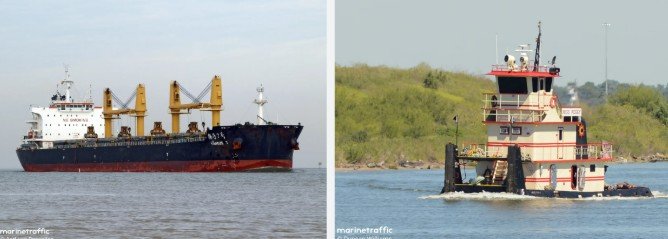
HOUSTON, Texas – The National Transportation Safety Board has concluded that a Houston pilot’s extended personal cell phone use while navigating a bulk carrier was a key factor in a deadly 2024 collision in the Houston Ship Channel that left one mariner dead.
The report stems from the July 19, 2024, collision between the bulk carrier Yangze 7 and the towing vessel Miss Peggy near Lynchburg in the Houston Ship Channel.
The collision occurred at approximately 2:04 p.m. while both vessels were inbound.
The impact caused the Miss Peggy to capsize and sink with five crewmembers on board. Four crewmembers were rescued by a nearby Good Samaritan vessel, while a fifth was later found dead inside the sunken towboat.
One crewmember suffered serious injuries, another sustained minor injuries, and an undetermined amount of oil was released into the Houston Ship Channel.
The NTSB estimated total damages, including salvage operations and pollution mitigation, at approximately $3.7 million. The Yangze 7 sustained no damage.
Pilot Distracted by Personal Cell Phone Use
According to the NTSB investigation, the Houston pilot directing the Yangze 7 failed to maintain a proper lookout because he was distracted by extended nonoperational cell phone use.
Investigators determined the distraction prevented the pilot from detecting the Miss Peggy ahead of the vessel.
The report also found that the captain of the Miss Peggy failed to maintain a proper lookout and did not detect the Yangze 7 approaching from behind.
In addition, the Yangze 7 bridge team failed to maintain a proper lookout, only noticing the towboat when it was less than one ship’s length ahead.
Although bridge crew members could hear the pilot’s personal phone conversations and at least one crewmember recognized they were unrelated to vessel operations, no one challenged the pilot or raised concerns.
The NTSB said this reflected ineffective bridge resource management and concluded that speaking up may have prompted the pilot to end the call and refocus on navigation.
No Policy Prohibited Personal Cell Phone Use
Investigators also found that the Houston Pilots organization had no policy prohibiting pilots from using personal electronic devices for nonoperational purposes while actively directing vessel movements.
According to the NTSB, the absence of such a policy likely normalized personal cell phone use during navigation, increasing risks to vessels and their crews.
The agency determined the probable cause of the collision was the loss of situational awareness by the Houston pilot, the Yangze 7 bridge team, and the captain of the Miss Peggy due to their collective failure to maintain a proper lookout.
The report concluded that the pilot’s distraction from personal cell phone use and the lack of a policy prohibiting such activity contributed directly to the accident.
NTSB Issues Safety Recommendations
As a result of the investigation, the NTSB issued two new safety recommendations.
The agency urged the U.S. Coast Guard to prohibit the nonoperational use of personal electronic devices by individuals directing vessel movements in waterways under its jurisdiction.
The NTSB also recommended that the American Pilots’ Association develop guidance prohibiting pilots from using personal electronic devices for nonoperational purposes while actively directing vessel traffic and encourage member organizations to adopt those standards.